Indoor vs Outdoor Cannabis (and Greenhouse): How the Bud Differs
Key takeaways
- Indoor vs outdoor cannabis comes down to light source, environment control, and what the grower is able to coax out of the plant.
- Indoor flower tends to be dense, frosty, and consistent; outdoor flower is often bigger, earthier, and shaped by the actual season.
- Greenhouse sits in the middle, natural light with some climate control, which can produce really nice flower.
- None of the three is automatically better; what matters is the genetics, the grower’s skill, and how well the flower was finished and cured.
- Knowing what to look for (smell, structure, trichomes, moisture) will tell you more than the grow method alone.
Indoor vs outdoor cannabis is really a question about where the plant lived and how that shaped the bud you’re holding. Each method produces different flower, different looks, different smells, sometimes a different feel, and once you know what to expect from each, picking a bag gets a lot easier.
How the grow environment shapes your flower
A cannabis plant is constantly responding to its surroundings. Light intensity, temperature swings, humidity, airflow, what’s in the soil, all of it leaves a mark on the finished bud. So when you change the environment, you change the flower. If you want to go deeper on how each method actually works, we’ve got a full breakdown, but here’s the plain version.
Indoor cannabis
Indoor grows happen in a fully controlled room. The grower sets the lights (usually powerful LEDs or HPS fixtures), dials in the temperature, controls humidity, and decides exactly when the plant gets “night” so it starts flowering.
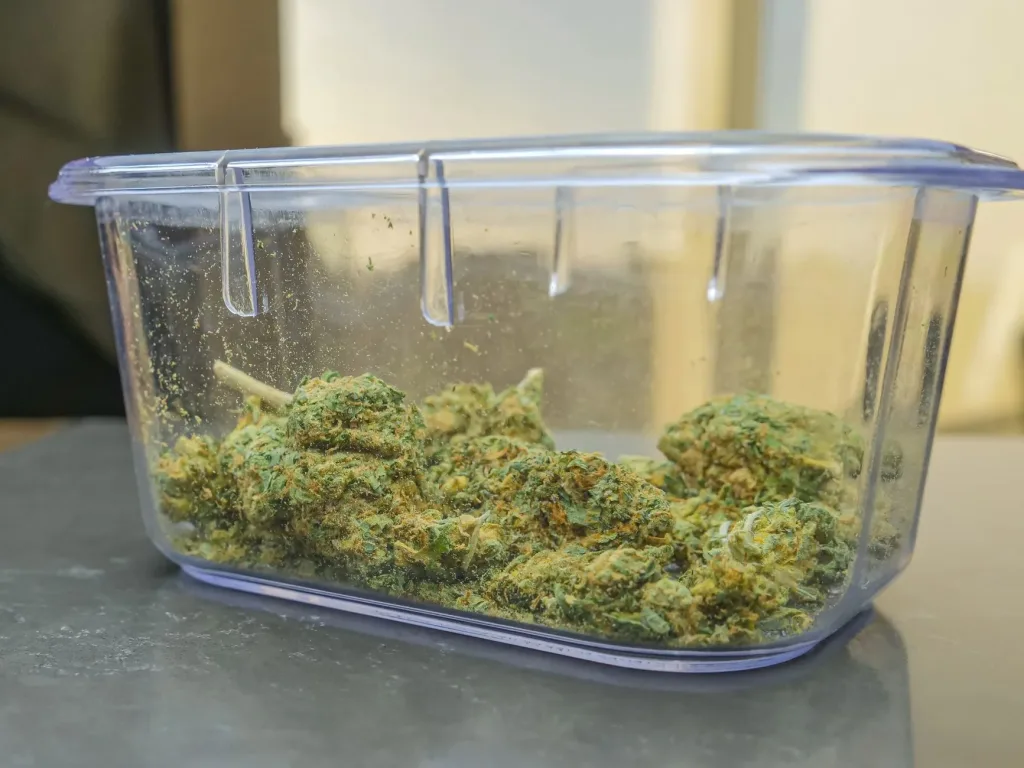
What you usually get from a good indoor batch: dense, tight buds with a heavy coat of trichomes (those are the sticky, crystal-like structures that hold most of the aroma and the good stuff). The smell tends to be sharp and loud, and one reason can be that nothing got rained on or dried out by wind mid-flower. Colours are often vivid, deep greens, purples, bright orange pistils, partly because the grower can dial temperatures to bring those out.
The trade-off is cost. Running powerful lights for long hours through the whole grow, managing HVAC, keeping pests out of a sealed space, it’s expensive, so indoor flower usually costs more. You’re also trusting that the grower is running good genetics and not just chasing big yields under bright lights.
Outdoor cannabis
Outdoor plants grow in the ground (or big containers) under actual sunlight, through an actual season. In BC that means a spring-to-fall cycle, with harvest usually coming in September or October.
The sun is powerful, more intense than most indoor lights, and it covers the whole light spectrum naturally. Plants grown outdoors can get large, and the buds reflect that: often bigger, sometimes airier, with a smell that many people describe as earthier or more complex.
A good outdoor crop from a skilled small grower, especially one doing living soil growing, can be outstanding. The bud might not look as magazine-perfect as indoor flower, but the smell can be deep and interesting in a way that tightly controlled indoor grows sometimes don’t match. Price is usually lower too, which makes sense given the production costs.
The honest catch: outdoor quality varies a lot. A wet September hurts crops. Pests are harder to manage. So the floor is lower, but a great outdoor batch from the right grower is worth seeking out.
Greenhouse cannabis
Greenhouse sits between the two. The plant gets natural sunlight through glass or plastic panels, but the grower can control temperature, add supplemental lighting, and manage humidity much better than fully outdoors. Some greenhouses use light-dep (light deprivation), blackout curtains that trick the plant into flowering earlier or more than once per year.
Good greenhouse flower can surprise people. You get a lot of what outdoor sun does to terpenes (the compounds that make your weed smell the way it does), with more consistency and better protection from weather. It’s often priced between outdoor and indoor. For everyday smoking, a well-run greenhouse can be a real sweet spot.
A quick side-by-side
| Indoor | Greenhouse | Outdoor | |
|---|---|---|---|
| Light source | Artificial (LED, HPS) | Sun + supplemental | Sun only |
| Bud density | Usually dense and tight | Varies, often solid | Can be airy or large |
| Smell profile | Sharp, loud, distinct | Bright to earthy | Earthy, complex, woodsy |
| Consistency | High batch to batch | Moderate to high | More seasonal variation |
| Typical price | Higher | Mid-range | Lower to mid |
| Environmental footprint | Higher (energy use) | Lower than indoor | Lowest |
What actually tells you if the flower is good
Here’s what I’d actually look at, regardless of the label on the bag:
Smell. Open the bag or jar and take a real sniff. If the smell hits you right away, something distinct, whether that’s citrus, pine, gas, sweet berries, whatever, that’s a good sign. Weak or grassy smell usually means the terpenes are gone, either from a rough dry or sitting on a shelf too long. Good flower from any grow method should smell like something.
Moisture. Bud should give a little when you squeeze it gently, not crumble to dust or feel wet and spongy. The harvest and drying process matters enormously here, even perfect outdoor flower can be ruined by a bad dry.
Trichomes. If you can see them (a small magnifier helps), you want milky or amber trichomes, not clear ones. Clear means it was harvested early. This is true for indoor and outdoor alike.
Structure isn’t everything. A lot of people assume fluffy outdoor buds are low quality. Sometimes they are, sometimes they’re just a different structure and the smell is incredible. Don’t judge entirely on looks.
Tip: Smell is your best single tool. If a batch has a strong, distinct nose, the terpenes are intact, and terpenes are a big part of what makes each strain smell and taste different.
If you want a closer look at just two of these, we dig into sun-grown vs indoor flower on its own in a separate piece.
Which should you choose?
If you want the most visually impressive, loudest-smelling flower and you don’t mind paying for it, a good indoor batch from a small-batch grower is usually going to deliver. You’re paying for consistency and craft.
If you’re buying for everyday smoking and you like an earthier, more complex smell, a solid greenhouse or outdoor from a grower you trust is the move. Some really interesting smelling weed is outdoor, because good genetics grown in good soil with real sun can do things that a controlled room sometimes can’t quite replicate.
Greenhouse is worth trying if you haven’t. A lot of people sleep on it. When the grower knows what they’re doing with light dep, the flower can be really impressive.
Browse our premium AAA flower and see which batch catches your nose.
Frequently asked questions
Is indoor cannabis always stronger than outdoor?
Not necessarily. Strength depends on genetics and how well the plant was grown and finished, not the building it was in. Good outdoor and greenhouse flower from skilled growers can be plenty strong. Don’t pick a bag based on grow method alone if potency is what you care about.
Why does outdoor weed sometimes smell earthier or more like hay?
The earthy part is normal and can actually be a good thing, outdoor flower is often described as earthier, and plenty of people like that. The hay smell, though, usually means the bud was dried too fast or cured poorly, not that it was grown outdoors. A well-cured outdoor batch should smell complex, not like a barn.
Is greenhouse cannabis any good?
Yes, often. Especially from growers using light deprivation and good genetics. It’s usually priced below top indoor, and the best greenhouse batches we’ve seen hold up really well on smell, moisture, and overall quality.
Does the grow method affect how the weed feels?
It can influence the terpene profile, which shapes the character of each strain. But the genetics of the strain itself and how it was grown (soil quality, harvest timing, cure) matter just as much. Two different strains grown in the same indoor room can feel very different from each other.
How do I know if outdoor flower was harvested at the right time?
Trichome ripeness is the real indicator. With a small magnifier, look for milky or amber trichomes, not clear ones, since clear means it was harvested early. Smell helps too: if it smells flat or like cut grass, it was most likely dried too fast or cured badly.
Is sun-grown cannabis better for the environment?
Generally yes. Outdoor and greenhouse growing use far less electricity than a sealed indoor room running powerful lights for long hours every day. If the environmental footprint of your weed matters to you, outdoor and greenhouse are the lower-impact choices.