Cannabis Plant Training: LST, Topping and SCROG Explained
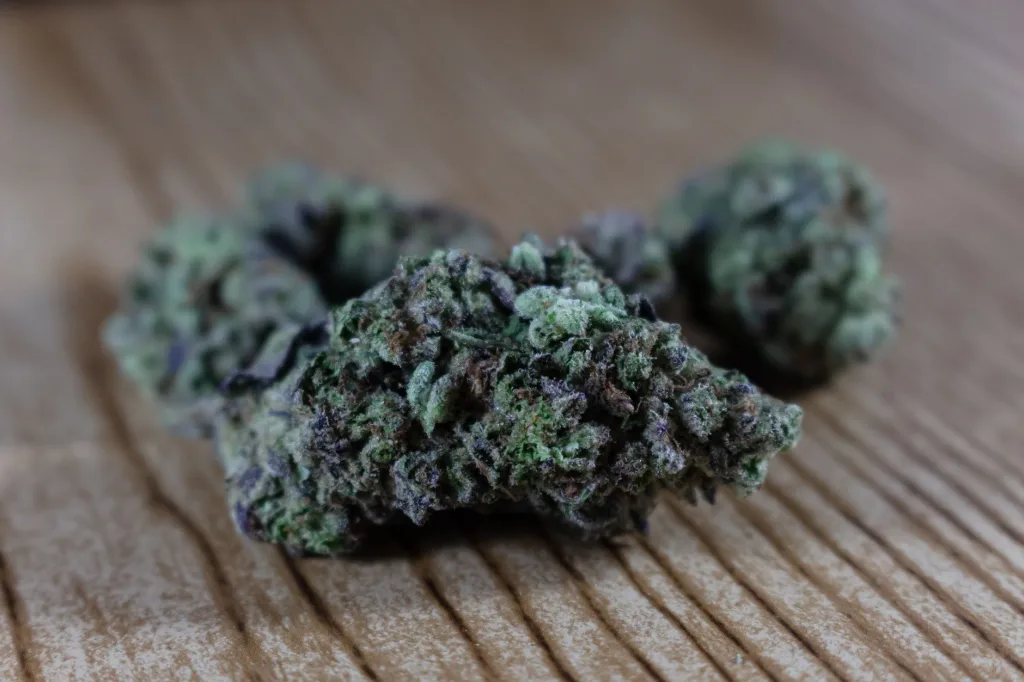
Key takeaways
- Cannabis plant training is how growers shape a plant’s structure so light reaches more of it, which affects bud size and density.
- LST (low-stress training) bends and ties branches without cutting. It’s gentle, so it suits beginners and autoflowers.
- Topping cuts the main stem to create two colas instead of one, making the plant bushier overall.
- SCROG (screen of green) uses a horizontal net to hold multiple branches at the same height, spreading them evenly under the light.
- As a buyer, you can’t reliably spot training from the jar, since growers also sort buds by size, but training can help more of the plant produce full-sized buds.
Cannabis plant training is the practice of physically guiding a plant’s growth so it fills out differently than it would on its own. Growers do it to get more bud sites exposed to light, which usually means bigger, denser flowers across the whole plant instead of one tall spindly top and a lot of wispy larf below it.
Training helps more of the plant reach full size, so the lower branches get a real chance to grow proper buds instead of small, airy ones. It’s one of those things that separates a thoughtful small-batch grow from a rushed one. You can read more about the broader picture of how cannabis is grown if you want more context on what goes into a batch before it hits our shelves.
Why growers bother with cannabis plant training
Left alone, a cannabis plant grows in a classic Christmas-tree shape. The top cola gets the most light, and everything lower gets progressively less. That top bud ends up fat and covered in trichomes. The lower branches end up with smaller, airier buds that don’t develop as well because they’re stuck in the shade of everything above them.
Training flattens that canopy out. When all the bud sites end up roughly at the same height, they all get the same amount of light. More light across more of the plant means more energy going into flower development across the whole thing, not just the top.
This is especially important indoors, where the light source is fixed and the grower controls everything. Indoor vs outdoor vs greenhouse growing all have different canopy challenges, but training is most precisely applied indoors where you can really dial in the light coverage.
LST: low-stress training
LST is the gentlest of the three. The grower bends branches and ties them down, usually to the pot or a support frame, so the plant grows outward and sideways instead of straight up. No cuts, no wounds. The plant isn’t being damaged, just redirected.
When a branch gets bent down and tied, the plant responds by pushing the lower growth points upward toward the light. Over a few days, what were small side shoots start becoming proper branches with their own bud sites. You end up with a much more even, spread-out plant instead of a tall narrow one.
LST works particularly well on autoflowering strains because autos run on a fixed time schedule and don’t recover from stress as easily as photoperiod plants. Since LST doesn’t involve any cutting, the plant doesn’t need time to heal and keeps growing on schedule.
A well-LST’d plant often grows buds that are fairly consistent in size from top to bottom. No one massive top and a pile of scraps.
Topping
Topping is where you actually cut the plant. The grower snips off the very tip of the main stem, which removes the single dominant growing point. Instead of one main cola continuing upward, the plant responds by pushing two new main branches from just below the cut.
Those two branches become the new dominant growth, and the process can be repeated on each of them. Topped multiple times, a plant goes from one main stem to two, then four, then eight, building out a wide, multi-cola structure. It takes longer because the plant needs recovery time after each cut, but the result is a bushier plant with more top-quality bud sites.
Topping is a higher-commitment technique. It’s not ideal for autoflowers because the recovery time eats into a fixed, short lifecycle. On photoperiod strains in a longer vegetative stage, it has time to work properly. Growers usually top during that vegetative stage, once the plant has a few sets of leaves and is healthy enough to bounce back.
The flower quality on a well-topped plant tends to be more consistent throughout. Growers who pair topping with good genetics and a solid environment (living soil growing is one example) often produce the kind of batches where you’re getting real top-shelf quality from most of the plant, not just the crown.
SCROG: screen of green
SCROG takes the logic of LST and adds a piece of infrastructure. A horizontal net or screen is stretched across the growing space at a set height above the plants. Most growers set it fairly low and fill it in during the vegetative stage. As the plant grows up into the screen, the grower weaves the branches through the holes and out across the net, spreading them horizontally.
The screen basically becomes a map of the canopy. Every branch that pokes through gets tucked outward, and the bud sites grow up through the net to form a flat, even canopy. When that canopy hits the light, every bud site is at almost the same distance from the source.
SCROG is really a whole-room or whole-tent technique. It works best when the grower has the space dialled in, whatever the plant count. A SCROG grow done well is one of the tidier things to see, this flat, even green surface with bud sites coming up through it like a grid.
A good SCROG run tends to grow notably uniform buds, with similar size and density across the whole canopy.
A quick comparison
| Technique | How it works | Stress level | Effect on the plant |
|---|---|---|---|
| LST | Bending and tying branches down | Low, no cuts | Wider, flatter plant with more even bud sizing |
| Topping | Cutting the main stem tip to split growth | Medium, plant needs recovery time | Multiple dense colas instead of one main top |
| SCROG | Weaving branches through a horizontal net | Low to medium, gradual canopy management | Flat, even canopy with bud sites at a similar height |
What this means when you’re shopping for flower
None of this is stuff you need to memorise before buying a gram. But if you’re the kind of person who picks a strain on purpose and cares about what’s actually in the bag, it’s worth knowing what to look for.
Training can help more of the plant produce full-sized buds, so you’re not digging around for the one good nug. You can’t reliably tell from the jar, though, because growers often sort buds by size and send the smaller ones to pre-rolls or shake. Clean, even trim is a good sign too, but it tells you about careful handling after harvest, not about training. When a small-batch grower takes the time to do LST or top their plants properly, more of the plant gets a real shot at turning into the good stuff.
The opposite, a plant that was grown with no training, often shows up as one or two big buds and a lot of smaller, less developed ones. That’s not always a quality problem, especially in an outdoor or greenhouse grow where the sun does a lot of the heavy lifting. But indoors, under a fixed light, an untrained plant usually ends up with a lot of underdeveloped lower buds.
The harvest and drying side of things matters too, because even great canopy management gets undone by a rushed dry. Training sets up the plant, and a careful dry and cure finishes the job.
If you want to get into the craft side of flower and find batches from growers who put this kind of thought into their grows, have a look at our premium AAA flower.
Frequently asked questions
Does cannabis plant training actually change the quality of the bud?
It changes how evenly quality is distributed across the plant. A well-trained plant puts more of its energy into bud development across multiple sites instead of pouring most of it into one main cola. The top bud on an untrained plant might be excellent, but the rest of the plant often isn’t. Good training brings more of the plant up to that level.
Can growers use more than one technique on the same plant?
Yes, and most experienced growers do. Topping and LST are commonly combined, the grower tops the plant to split the main stem, then uses LST to spread those new branches outward. SCROG is often done alongside topping too. Some growers also add supercropping, where they pinch and bend a stem so it can be laid sideways, or defoliation, where they pull some of the big fan leaves so light gets further down the plant. The techniques work well together because they’re all after the same thing: getting light to more bud sites.
Is trained flower always better than untrained flower?
Not automatically. Training is one factor. The genetics, the growing environment, the soil, and the post-harvest handling all matter just as much. A beautifully trained plant in poor conditions still won’t produce great flower. And some outdoor grows produce stunning bud with minimal training because the sun covers the canopy naturally.
Why do some craft growers skip SCROG even though it sounds effective?
SCROG takes a lot of setup and ongoing attention. For a small-batch grower running a handful of unique strains, it can be impractical, especially if plants have different growth rates and structures. LST and topping are more flexible when you’re working with a variety of genetics at once. SCROG shines when you’re running the same strain repeatedly in a dialled-in space.
How do I know if the flower I’m buying came from a trained plant?
You usually can’t tell for sure. Open the jar and look at the buds, are they similar in size and density? That’s a loose hint at good canopy control at most, because growers also sort buds by size and send the smaller ones to pre-rolls or shake. Clean, even trim is a sign of careful handling after harvest, not of training. One massive bud and a lot of smaller wispy ones often means less canopy control, though that’s not a hard rule for every grow style.
Does plant training affect terpenes or the smell of the flower?
Not directly. Training affects light distribution and bud development, but the terpene profile comes from the strain’s genetics and the growing environment, things like temperature, humidity, and soil. What training can do indirectly is help more buds on the plant mature fully, so you get better terpene development across a larger portion of the harvest rather than just at the top.