What Small Batch Cannabis Really Means (And Why It Matters for Your Flower)
Key takeaways
- Small batch cannabis means a grower tends fewer plants, usually in a single room or small facility, rather than running a large commercial operation.
- Smaller grows let growers catch problems early, dial in the dry and cure, and actually pay attention to each plant.
- The label alone doesn’t guarantee quality, the nose, the trim, and the structure of the buds tell you more than the marketing copy.
- Living soil, careful hand-trimming, and a slow cure are the details that small-batch growers tend to get right more often.
- Knowing what to look for helps you find flower that smells and smokes the way it should.
Small batch cannabis just means the grower is working with a small number of plants at a time, close enough to give each one real attention. That’s the whole idea. It’s the opposite of a warehouse full of thousands of identical plants running on timers.
Why plant count actually matters
Think about the difference between a restaurant cooking fifty covers a night and one cooking five hundred. The chef with fifty tables can taste each dish. The one with five hundred is managing a system, not a kitchen.
It’s similar with weed. When you’re running a smaller grow, you notice a plant that’s a little off. You catch a nutrient issue before it ruins a whole room. You can water by hand and check the soil instead of relying entirely on automated systems. None of that is impossible at scale, but it gets harder fast.
Many small-batch growers focus on a handful of strains. That focus matters. You get to know exactly how a particular strain behaves, when it wants to be pushed and when it doesn’t. The plants tend to get better over successive runs because the grower is learning every time.
What small-batch growers usually do differently
The dry and cure
This is where a lot of commercial flower falls apart, and where small-batch producers tend to shine. A slow, controlled dry takes time and space. In a large facility, there’s pressure to turn rooms over quickly. That can mean flower gets dried too fast, which locks in a harsher smoke and dulls the smell considerably.
A careful cure takes weeks. The jars or bins get opened regularly so moisture can redistribute evenly. Done right, the flower holds onto its terpenes, the compounds that give each strain its particular smell and flavour. Done wrong, you get bud that smells flat in the bag and tastes like nothing special in the bowl.
Hand trimming vs machine trimming
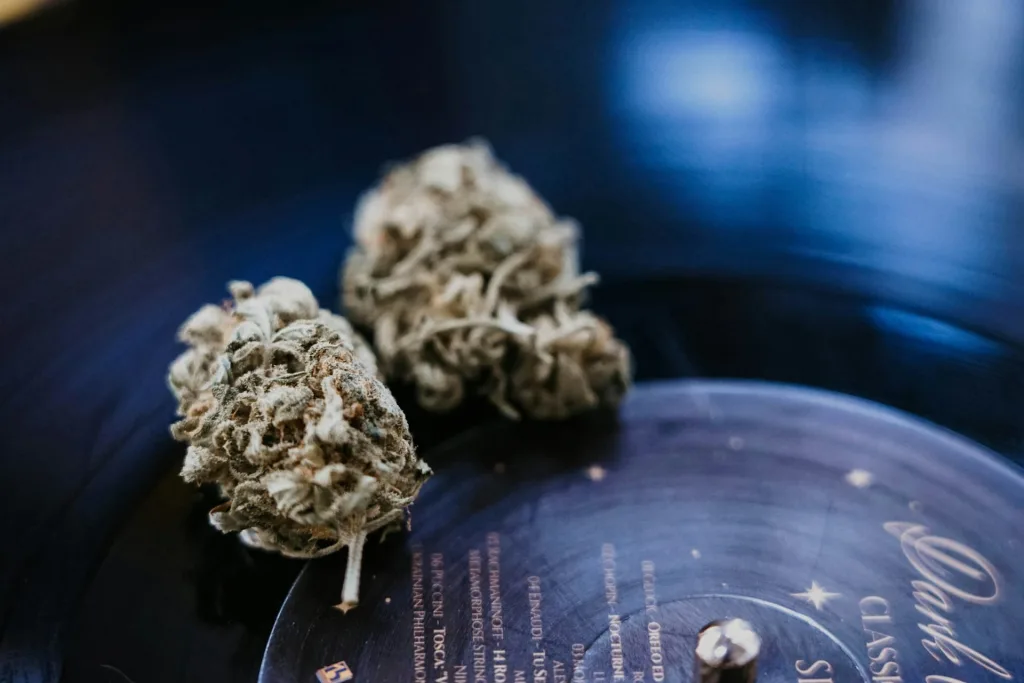
Machine trimmers are fast and cheap to run. They’re also rough. The trichomes, those tiny sticky crystals covering a good bud, get knocked off pretty easily when the flower is tumbling around inside a machine. Hand-trimmed bud just looks different, the structure stays intact, the sugar leaves are cut cleanly, and you can see the trichome coverage clearly.
Small-batch growers hand-trim more often simply because the volume makes it practical. At a large commercial scale, hand-trimming the whole crop isn’t realistic.
Growing medium and inputs
A lot of small-batch growers are drawn to living soil because it’s a slower, more hands-on way to grow. Living soil relies on a healthy microbial ecosystem in the growing medium rather than bottled nutrients fed on a schedule. It takes more time to set up and maintain, but many growers find the flower it produces has a fuller, more complex flavour profile. It’s the kind of approach that doesn’t scale up easily, which is partly why it stays in the small-batch world.
If you want to go deeper on how different growing setups affect the end product, we wrote about how cannabis is grown across different production styles, and there’s a good breakdown of sun-grown vs indoor if you’re curious about how light source plays into flavour and structure.
How to spot real small-batch quality (without taking anyone’s word for it)
The word “small-batch” is on a lot of labels right now because it sells. Here’s how to check the flower itself rather than the packaging.
| What to check | Good sign | Red flag |
|---|---|---|
| The smell | Strong, distinct, recognizable to the strain | Flat, faint, or just vaguely “weedy” |
| Bud structure | Dense or airy but intact, trichomes visible | Crumbly, over-dry, crystal coverage looks worn off |
| Trim quality | Clean lines, no obvious fan leaf leftovers | Rough edges, rounded off, leaf material throughout |
| Moisture level | Slight give when you press it, the stem snaps cleanly | Crumbles to dust or feels wet and spongy |
| Colour | Vibrant greens, purples, oranges (strain-dependent) | Faded, brown-ish, or uniformly dull |
The nose is the fastest check. If you open the bag and get a big, specific smell that you can actually describe, that’s a good batch. If it smells like not much, no amount of marketing will fix that in the bowl.
Tip: Check the package date when your order arrives. Fresh flower (packaged within the last few months) will almost always smell better than something that’s been sitting. Small-batch growers usually run smaller quantities, so batches tend to sell through faster.
What small-batch doesn’t automatically mean
It doesn’t mean the highest THC number on the shelf. Potency and quality aren’t the same thing, and chasing percentage points is often how people end up with flower that hits hard but doesn’t taste like anything. Small-batch is really about the full experience, a smell you notice, a flavour that holds on the exhale, a smoke that isn’t rough.
It also doesn’t automatically mean organic, pesticide-free, or grown outdoors. Those are separate questions worth asking. Small-batch just describes the scale of the operation, not every detail of how it was run.
And it doesn’t mean it’s always more expensive. Some smaller growers keep costs reasonable because they’re not carrying a huge facility overhead or marketing budget. You’re paying for the care, not necessarily a premium brand name.
Why we pay attention to this stuff
At CannaBlossom, the strain is the whole point. When we’re looking at what to bring in, we’re asking the same questions you’d ask yourself: does this smell right, does the grower actually know this plant, and is the cure done properly? Small-batch producers tend to answer those questions better more often. Not always, but more often.
If you want to explore what’s in right now, browse our premium flower and see what’s fresh on the shelf.
Frequently asked questions
Is all small-batch cannabis better than commercial cannabis?
Not automatically. The term describes scale, not quality. A sloppy small grower can produce mediocre flower just as easily as a large one. That said, the conditions that produce consistently good bud, close attention, careful drying, hand trimming, are easier to maintain at a smaller scale, so there’s more good flower coming out of small grows proportionally.
Does small-batch mean it’s harder to find?
Sometimes. Smaller grows produce less volume per run, so a batch can sell through faster. If you find something you really like from a small producer, write down the name so you can look for the next batch. Stock can change from week to week.
How do I know if a grower is actually small-batch or just using the label?
Check the flower. A good nose, intact trichomes, clean trim, and the right moisture level are the real indicators. If the flower delivers on those, the label is probably telling the truth. If it’s flat and crumbly, the label doesn’t matter much.
Does small-batch cannabis taste different?
It often does, particularly if the grower used living soil and did a slow cure. The flavour comes primarily from terpenes, and terpenes survive best when the dry and cure are handled carefully. Many people do notice a difference once they’ve tried flower where those steps were done well.
Are hand-trimmed buds actually worth it?
If trichome coverage matters to you, yes. Machine trimming is faster but rougher on the buds. For flower you’re going to break up and smoke or vaporize, the difference is real enough that many people prefer hand-trimmed once they’ve compared the two side by side.
What strains tend to come from small-batch growers?
Small-batch growers often focus on strains that are trickier to grow or that have fallen out of favour with large commercial producers because the yield isn’t high enough to justify the space. That’s actually where some of the most interesting genetics end up, in the hands of smaller growers who care more about how it smokes than how much it produces per square foot.