Skunk: The Strain That Changed Everything
Key takeaways
- Skunk #1 was developed in the 1970s by US breeders crossing Colombian, Mexican, and Afghani genetics.
- It was one of the first stabilised, reliably consistent strains ever bred, which is a big deal in cannabis history.
- The smell is distinctive and polarising: sharp, sour, and funky in a way that’s become shorthand for strong weed.
- Skunk genetics are in a huge portion of popular strains today, from Cheese to Super Silver Haze.
- Knowing a bit of skunk strain history helps you understand why so many strains on the shelf smell and feel the way they do.
The skunk strain history starts in the 1970s in the United States, where a group of breeders crossed Colombian sativa, Mexican sativa, and Afghani indica genetics to create what became known as Skunk #1. It’s one of the earliest truly stabilised cannabis strains, and its genetics have spread so far that you’re probably smoking something descended from it right now.
Where Skunk #1 actually came from
Before Skunk #1, most cannabis was either landrace flower brought over from growing regions abroad, or very loosely bred hybrids that didn’t grow or smell the same from seed to seed. Consistency was a problem. You didn’t really know what you were getting.
A collective of American breeders, often credited under the name Sacred Seeds, spent years crossing and backcrossing different genetics to fix the traits they wanted: vigorous growth, reliable yields, a shorter flowering time than pure sativas, and that smell. The goal was a plant that grew well indoors, finished faster than the tall Colombian or Mexican sativas, and produced bud that was both potent and consistent.
What they landed on was a hybrid that leaned slightly sativa in structure but brought in enough Afghani genetics to keep it manageable and give it a dense, resinous bud structure. By the late 1970s and into the early 1980s, Skunk #1 seeds were circulating, and eventually made their way to the Netherlands. That’s where things really took off.
Why the Netherlands mattered
The Dutch seed industry picked up Skunk #1 and ran with it. Amsterdam’s coffee shop scene in the 1980s created a market for consistently good bud, and Skunk #1 delivered exactly that. Seed banks stabilised it further, sold seeds internationally, and breeders started crossing it with everything they could get their hands on.
This is when skunk genetics started showing up everywhere. Cross it with a Haze and you get something closer to what we’d now call a classic Dutch sativa-leaning hybrid. Cross it with Northern Lights or another Afghani-heavy strain and you push it toward a heavier, more relaxing profile. If you’re curious about how Haze fits into all of this, the Haze strain family is worth reading alongside this.
The Dutch scene basically turned Skunk #1 from an American underground project into the genetic backbone of a global industry.
The smell: why it’s called Skunk
If you’ve ever opened a bag and immediately thought “oh, that’s strong,” you’ve probably encountered skunk-influenced genetics. The smell is sharp and sour with a funky, almost ammonia-adjacent edge. It’s not for everyone standing nearby, but for a lot of people who love flower, that funk is a quality signal.
The terpenes behind that smell are mostly thiols (sulphur-containing compounds) combined with myrcene, caryophyllene, and other common cannabis terpenes. Thiols in particular are responsible for the skunky edge that gives the strain its name. These are the same family of compounds that give actual skunks their spray. It’s a strange thing to breed toward deliberately, but it stuck because it was distinctive and, to the people who knew, it meant the bud was real and strong.
Over decades of breeding, that skunk funk has been softened, sharpened, mixed with other smells, and sometimes almost hidden. But it’s still there in a lot of what you’ll find on a quality shelf.
Skunk strain history and the strains it created
It’s hard to overstate how far these genetics have spread. A handful of well-known strains that trace back directly to Skunk genetics:
- Cheese (UK Cheese, Big Buddha Cheese), a phenotype of Skunk #1 that developed in the UK in the late 1980s, picked for an especially funky, cheesy smell that read as a mutation of the original skunk profile
- Super Silver Haze, Haze crossed with Skunk #1 and Northern Lights, one of the most celebrated sativa hybrids from the Dutch seed era
- Shiva Skunk, Skunk #1 crossed with Northern Lights #5, leaning heavier and more resinous
- Island Sweet Skunk, a Canadian favourite with a sweeter, more tropical nose that still carries the underlying skunk structure
And that’s just the direct descendants. The second- and third-generation crosses that carry skunk genetics are too numerous to list. If you want a fuller picture of how these family trees work, the article on Cannabis Strain Families: The Big Genetic Lines gives a good overview of where the major lineages sit relative to each other.
What skunk genetics mean for how bud feels
Skunk #1 sits in an interesting spot. It’s a hybrid, so it doesn’t hit like a pure sativa or a pure indica. Most people describe skunk-forward strains as producing a clear-headed, fairly upbeat buzz that doesn’t completely pin you down. The original was strong for its time, and modern descendants can range from easygoing to quite heavy depending on how much indica has been stacked in over the breeding generations.
The thing skunk genetics reliably seem to pass on is good resin production, a strong nose, and decent bud density. Those are quality traits. When a grower picks up a skunk-lineage strain, they’re often reaching for that reliable structure as much as the smell.
Tip: If a strain’s name includes “Skunk,” “Cheese,” or “Haze x Skunk” in its lineage notes, you’re likely looking at something with that same funky, resinous DNA. It’s a good sign for nose and bag appeal.
How to spot skunk influence when you’re shopping
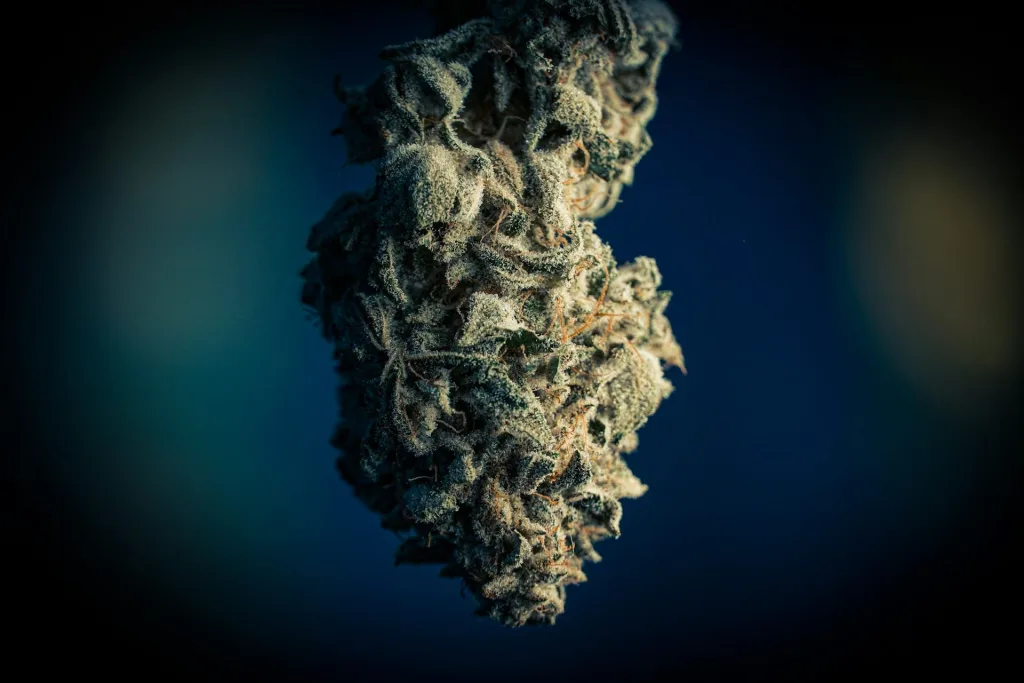
You won’t always see “Skunk” in the strain name, but there are signs. A strong, almost sharp sourness in the smell is the main one. Dense buds with a good coating of trichomes (the sticky crystals you can see on quality flower) are another. Skunk lineage tends to produce buds that look like they mean business.
Ask your budtender about lineage if you’re not sure. A lot of growers include parent strain information on their packaging now, especially craft and small-batch producers who are proud of the genetics they’re working with.
If you want to see what’s on the shelf right now, Premium Flower (AAA) is a good place to look for strains where the genetics and the quality actually show. We also carry Smalls & Popcorn if you want to try a new lineage without committing to a full purchase.
Frequently asked questions
Is Skunk #1 still available as a strain today?
Yes, though what you find varies. Some seed banks and craft growers still work with fairly true-to-original Skunk #1 genetics. Others carry strains that are close to the original but have been selected for specific traits over many generations. If the packaging says Skunk #1, ask the grower or check for lineage notes to get a sense of how close it is to the classic.
Why do so many strong strains smell “skunky”?
Because skunk genetics are so widespread that the smell ended up in a huge portion of popular cannabis varieties. That sulphur-forward funk became associated with potent, quality bud, so breeders didn’t breed it out. In a lot of cases they bred toward it. Now “smells skunky” is just shorthand for “this is real flower.”
Is Skunk #1 a sativa or an indica?
It’s a hybrid, originally bred from Colombian sativa, Mexican sativa, and Afghani indica. It leans slightly sativa in structure and in the kind of buzz most people describe, but it’s not a pure sativa. Modern descendants vary quite a bit depending on what other genetics have been added over the years.
What’s the difference between Skunk and Cheese?
Cheese is widely believed to be a Skunk #1 phenotype, meaning it’s a version of Skunk that expressed a slightly different smell profile, specifically that sharp, cheesy, funky edge. It was found and kept in the UK underground scene in the late 1980s and has been cloned and bred ever since. Genetically they’re closely related, but the smell and feel are distinct enough that they’re treated as separate strains.
Does skunk lineage mean a strain will be really strong?
Not automatically. Skunk #1 was strong relative to what was available when it was first bred, but potency comes from the whole plant and how it’s grown, not just the lineage. What skunk genetics tend to reliably pass on is good resin production and a strong smell. Those are signs of quality, but start low and go slow with any new strain regardless of its family tree.
Are there skunk-lineage strains that don’t smell like skunk?
Yes. Decades of crossing with other genetics have produced descendants that carry skunk in their lineage but smell quite different, sweeter, more citrusy, or more earthy. Island Sweet Skunk is a good example: the skunk is in there, but the nose is much more tropical than the original. Genetics don’t always show up the same way in every cross.