The Haze Strain Family: What It Is, What to Expect, and How to Shop It
Key takeaways
- The haze strain family traces back to a handful of landrace genetics blended together in California in the 1970s, and almost every haze on the shelf today descends from that original cross.
- Haze strains are known for a bright, buzzy, cerebral high rather than a heavy body feeling, and their smell runs toward citrus, earth, and spice rather than sweet or fruity.
- Most haze-descended strains grow tall and take a long time to finish, which is why truly good haze is harder to find and often more expensive.
- The terpenes to look for are terpinolene, ocimene, and sometimes limonene, though they vary batch to batch, so trusting your nose matters more than any label.
- If you want a proper haze smoke, look for small-batch growers who actually know the genetics, not just strains with “haze” in the name.
The haze strain family is a group of cannabis strains that all share genetics from one original cross, built in California in the 1970s from landrace plants sourced across Colombia, Mexico, Thailand, and South Asia. Almost every strain with “haze” in the name, and many without, traces its roots back to that one blend.
Where haze actually comes from
The original Haze was put together by two breeders known as R. Haze and Sam the Skunkman, working in Santa Cruz. They crossed several landrace sativas and kept selecting for the plants they liked most. The result was something new: a tall, slow-flowering plant with a sharp, almost medicinal smell and a high that sat behind your eyes rather than in your chest.
That original Haze made its way to the Netherlands in the late 1970s and early 1980s, where Dutch breeders started crossing it with faster-finishing strains to make it more practical to grow. That’s where you get names like Northern Lights #5 x Haze, Neville’s Haze, and later Super Silver Haze and Amnesia Haze. Each generation moved further from the pure landrace genetics and closer to something that would actually finish flowering before winter.
So when you pick up a bag labelled “haze” today, it’s almost certainly one of those later hybrids. Pure sativa haze is genuinely rare, and for most people that’s fine because the hybrids kept the interesting part of the high while cutting the grow time roughly in half.
For more on how haze fits into the broader map of cannabis genetics, the piece on cannabis strain families is a good place to get oriented.
What makes a haze strain feel like a haze strain
The high is the clearest tell. Haze strains tend to produce an energetic, heady buzz, more active and thought-forward than most indica-leaning flower. A lot of people describe it as good for daytime, for creative work, or for social situations. It’s not the kind of thing that turns most people into a couch. That said, potency varies a lot across different haze crosses, so if you’re newer to cannabis, start low and go slow regardless of the strain name.
The smell is the other signature. Classic haze has a sharp, almost tangy base note with something like sandalwood, pepper, or dried citrus underneath. It’s not fruity sweet. It’s got some edge to it. That profile comes largely from the terpene mix, which in haze-family strains often leans toward terpinolene and ocimene, two terpenes that show up less often in heavy indica crosses. Limonene shows up in a lot of haze hybrids too, pushing things toward a brighter, citrus-forward nose.
Worth noting: terpene profiles shift between batches and growers, so the nose on a specific haze you’ve tried before might not be identical in the next batch. That’s not necessarily a problem; it’s just the nature of plant genetics and growing conditions. Trust your nose over the strain name every time.
The haze family tree: a quick look at the main branches
| Strain | How it’s connected to haze | What’s different from the original |
|---|---|---|
| Neville’s Haze | Very close to original Haze genetics | Still long-flowering, considered one of the purest expressions still around |
| Super Silver Haze | Haze crossed with Skunk #1 and Northern Lights | Faster finish, heavier yield, still very much that cerebral buzz |
| Amnesia Haze | Multiple haze crosses with some Afghan and Hawaiian | More pungent smell, slightly rounder high, big in the Dutch coffee shop scene |
| Lemon Haze | Haze crossed with Lemon Skunk | Brighter citrus smell, often a bit more approachable |
| Ghost Train Haze | Ghost OG x Neville’s Wreck (haze-lineage) | Known for very high potency, less of the classic mellow haze feel |
This is a simplified picture. The haze family tree is genuinely messy because breeders have been crossing and recrossing these genetics for decades. But those five give you a sense of the range, from something close to the original Haze to strains that just share some DNA and a name.
How haze compares to other big genetic families
If you’ve spent any time reading about cannabis genetics, you’ve probably run into OG Kush as the other big reference point. The OG Kush lineage and the haze family are almost opposites in feel. OG Kush leans heavier, more body-forward, with a fuel-and-pine smell. Haze leans lighter, more head-forward, with that sharp citrus-spice nose. Both produced a huge number of hybrids. Both show up constantly in modern strain names. Knowing which way a strain leans, toward one family or the other, tells you a lot about what to expect before you even open the bag.
What to look for when you’re shopping haze
The biggest thing is finding flower from growers who actually know the genetics. “Haze” as a word on a label doesn’t guarantee anything. A lot of strains pick up the name because it tests well with customers, not because the plant has deep haze roots. So check the product details for where the flower came from and who grew it. Small-batch growers who talk specifically about their genetic sourcing are usually a better bet than bulk product where the lineage is vague.
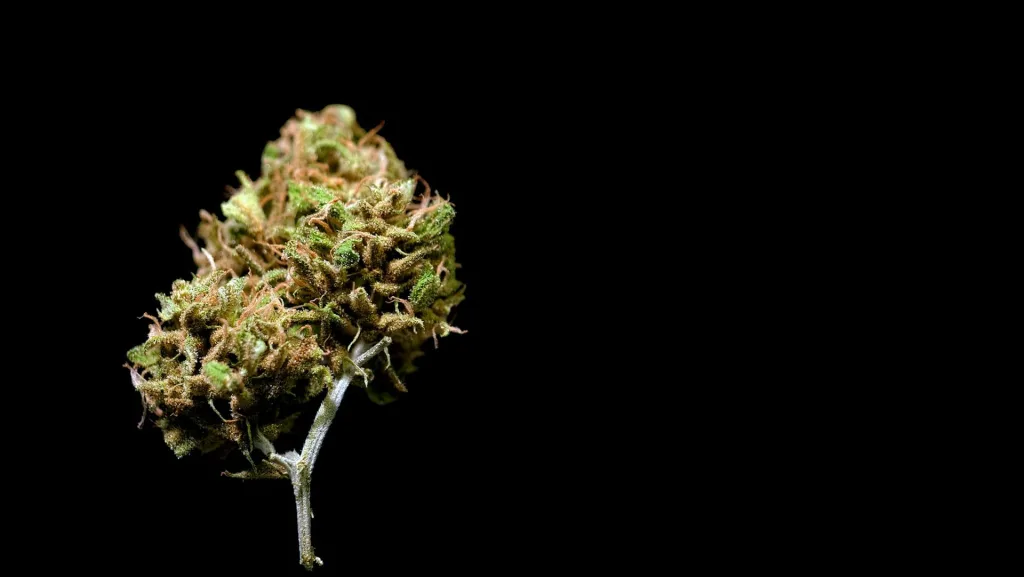
Look at the flower itself. Good haze tends to be light green with visible trichomes, and the structure is often a bit looser than a dense indica nug. If you can smell it before you buy, you want that sharp, almost tangy hit, not something that smells generic or grassy. Grassy usually means it needs more cure time or the terpenes have already degraded.
If you want to explore haze-descended strains without committing to a full ounce, Smalls & Popcorn is a good way to try a strain at a lower price point. For top-shelf haze-family flower where the grower has put real work into the genetics, Premium Flower (AAA) is where we put the stuff that earns it.
Tip: If a haze smells like nothing when you first open it, that batch probably isn’t worth your money. Good haze-family flower should hit you with something sharp and interesting right away. Terpenes are fragile; they don’t improve sitting in a bag.
Frequently asked questions
Is haze a sativa or an indica?
Original Haze is about as sativa as cannabis gets. Most of the haze strains you’ll find now are sativa-dominant hybrids, so they’re not pure sativa, but they lean that direction in terms of the kind of high they produce.
Why does haze flower cost more than a lot of other strains?
Haze-leaning plants take longer to flower than most hybrids, and they often yield less per plant. That means more time, more resources, and more risk for the grower. When you find well-grown haze at a fair price, it usually means a grower who really cared about the genetics rather than a quick turnaround crop.
What does haze actually smell like?
The classic nose is sharp, a bit earthy, with citrus and spice underneath. Some people pick up sandalwood or a kind of incense quality. It’s not sweet like a candy strain. Think more dried orange peel and pepper than mango or grape.
Can I find pure original Haze?
Genuinely pure Haze, close to the original landrace cross, is very hard to find in a retail setting. Most breeders have crossed it with something to make it more practical to grow. If you see it, it’s a rare thing and usually commands a higher price for a reason.
How do haze strains compare to kush strains in terms of effects?
Generally speaking, haze strains lean more cerebral and energetic, while kush strains lean heavier and more body-focused. They’re not absolute rules because hybrids blur everything, but if you know which family a strain leans toward, it gives you a useful starting point for what to expect.
Are there haze-family strains in vape or concentrate form?
Yes. A lot of popular haze crosses show up as vape cartridges and concentrates, though the terpene profile can shift a bit from flower to extract depending on the process. If you’re specifically after that haze nose, it’s worth asking what the source material was and how the extract was made.