Kush Strains Explained: What They Are, How They Smell, and How to Shop Them
Key takeaways
- Kush strains trace back to landrace genetics from the Hindu Kush mountain region, and that origin shapes the smell, the look, and the kind of high you get.
- The classic Kush nose is earthy, hashy, and a little fuel-forward, if a strain smells like pine cleaner or sweet fruit with nothing else going on, it probably isn’t a true Kush.
- OG Kush is the anchor of the family tree, and most modern Kush crosses you’ll see on a menu trace back to it in some way.
- Dense, heavy buds with a thick coat of resin are a reliable visual sign you’re holding a well-grown Kush.
- Kush strains lean heavily toward the heavier, body-forward side of the spectrum, so they’re worth knowing before you buy.
Kush strains are a family of cannabis that traces back to landrace plants from the Hindu Kush mountains, and that heritage is why they smell, look, and hit the way they do. The name isn’t just branding, it’s a real genetic line with consistent traits you can learn to spot.
Where Kush strains actually come from
The Hindu Kush is a mountain range that runs through Afghanistan and Pakistan. The cannabis plants that grew there naturally over centuries adapted to a harsh, dry climate. That’s where the original Kush genetics come from.
Those landrace plants made their way into North American breeding circles decades ago, and breeders crossed them with other lines to create the Kush strains we know now. OG Kush is the one that changed everything. It became the backbone of a huge chunk of the modern cannabis menu, and if you want the full story on where it fits, the OG Kush lineage article goes deep on that.
From OG Kush came a long list of descendants: Bubba Kush, SFV OG, Ghost OG, Tahoe OG, and plenty more. Some breeders kept the name “Kush” loose, so you’ll also see it slapped on strains that aren’t closely related. That’s part of why understanding the actual traits matters more than trusting the name alone.
Kush strains explained: the smell and the look
The nose on a classic Kush is earthy and hashy, usually with a fuel or diesel edge underneath. Some have a pine note. Some lean a bit sweet or floral on top, but there’s almost always that damp earth and hash base. It’s a pretty distinctive smell once you’ve spent time with it.
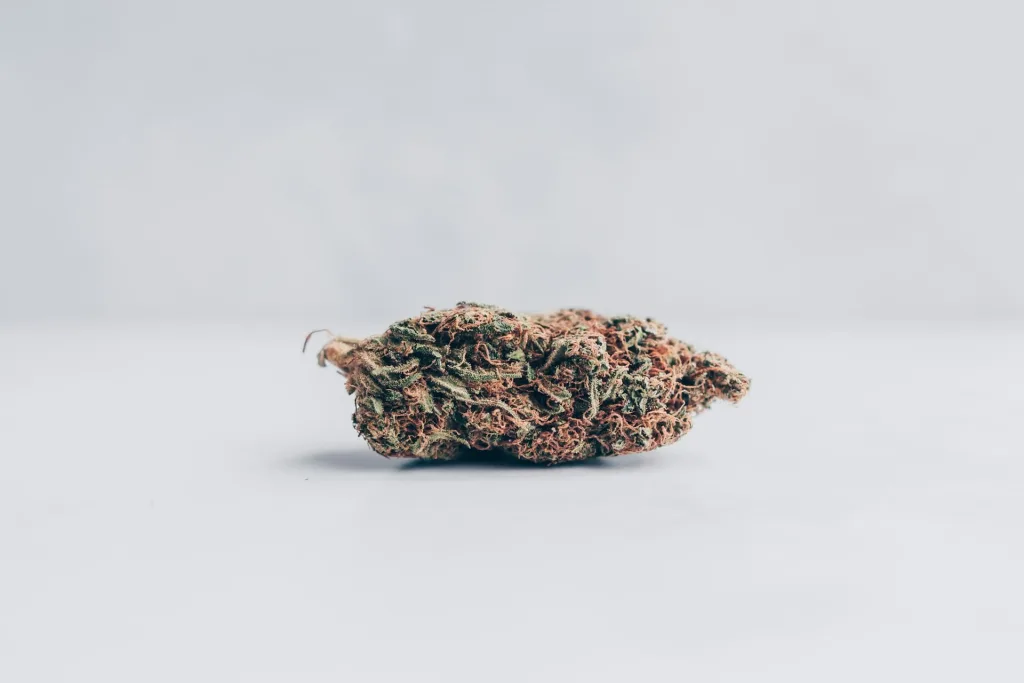
Visually, Kush strains tend to grow compact, dense nugs. The buds are usually heavy for their size, and a well-grown Kush will have a thick layer of trichomes, the sticky, resinous coating that holds most of the good stuff. Purple hues are common too, especially in colder grows. Bubba Kush and its relatives are known for going dark.
If you’re picking up a jar and the bud is light and airy with a sweet candy smell and nothing dank underneath, it’s probably not a true Kush. That doesn’t make it bad bud, it just means the name might be more marketing than genetics.
Kush strains explained: what the high is like
Kush strains sit firmly on the heavier, more body-focused end of the spectrum. They’re not the strains you’d reach for if you want a buzzy, talkative, get-things-done kind of high. Most people describe Kush as settling in gradually, sitting in the body, and leaning toward the couch end of the evening.
That’s a generalisation, and every batch is different, but the Kush family has a pretty consistent reputation for being on the heavier side. New smokers especially should take that seriously. Start low, go slow, it’s a good rule with any flower, and with Kush it’s particularly worth keeping in mind.
The heavier profile is also why Kush genetics dominate the hash world. Traditional hash from Afghanistan is made from Kush-family plants, and their naturally resin-heavy buds make them a natural fit for concentrate production.
How Kush fits into the bigger picture of strain families
Kush is one branch of a larger family tree. If you want to understand how it sits alongside other big genetic lines like Haze, which is essentially the opposite end of the spectrum, the cannabis strain families overview is a good read. Haze is tall, sativa-leaning, citrus-forward, and energetic. Kush is short, dense, earthy, and heavy. Knowing both helps you triangulate almost any strain you’ll see on a menu.
A quick comparison: classic Kush traits vs. what can go wrong
| What you want to see | What’s a flag |
|---|---|
| Dense, heavy nugs with visible resin | Light, airy bud that feels hollow |
| Earthy, hashy, fuel-forward smell | One-note sweetness with nothing dank underneath |
| Sticky to the touch | Dry and crumbly with no give |
| Clear Kush-family genetics in the lineage | “Kush” in the name, no traceable lineage given |
How to shop Kush strains smart
First, smell it if you can. That earthy-fuel-hash combination is the clearest sign you’re in Kush territory. If the jar or bag is sealed and you can’t get a whiff, look for genetics info. A strain that names its parents and has OG Kush, Afghani, or a known Kush cross somewhere in there is a better bet than one that just has “Kush” tacked onto a made-up name.
Check the trichome coverage. Under even basic lighting, a well-grown Kush should look frosty. The buds should feel heavy and a little sticky. Loose, dry, or fluffy bud from a Kush strain is usually a sign of a rough grow or a long time in storage.
If you’re after quality flower and want to browse what we’ve got in, the Premium Flower (AAA) section is a good place to look. That’s where the craft and small-batch stuff tends to land.
Frequently asked questions
Is Kush indica or sativa?
Kush strains are heavily indica-leaning. The Hindu Kush landrace plants that started the family are classic indica genetics: short, stocky, fast-flowering, and resin-heavy. Modern Kush crosses can have some sativa in the mix, but the Kush traits usually dominate.
Is OG Kush the same as regular Kush?
Not exactly. OG Kush is a specific strain with its own genetics and history. It’s the most influential member of the Kush family, but it’s distinct from older, pure Kush landraces like Afghani. Most of what you’ll see on a menu today is either OG Kush itself or a cross that descends from it.
Why does Kush smell like fuel or hash?
That smell comes from the terpene profile. Kush strains tend to be high in myrcene, which gives that earthy, musky base, along with other terpenes that contribute the fuel and hash notes. It’s a direct result of the genetics, those traits have been carried through generations of breeding.
Is every strain with “Kush” in the name actually a Kush?
No. “Kush” has become a popular marketing word, and some strains use it without a real genetic connection to the family. The smell and the look are better indicators than the name. If the lineage is listed, check it. If it traces back to OG Kush, Afghani, or another known Kush strain, you’re in good shape.
Are Kush strains good for beginners?
They can be, but the heavier, body-forward profile catches some new smokers off guard. If you’re newer to flower, start low, go slow, and give yourself time to see how a small amount lands before having more.
What’s the difference between Kush flower and Kush hash?
Kush flower is the dried bud. Kush hash is made from the resin glands (trichomes) of Kush-family plants, pressed or processed into a concentrate. Kush genetics are popular for hash-making because the plants produce so much resin naturally. Traditional Afghan-style hash almost always uses Kush-family plants as its source.