How to Make Hash: A Complete Guide
Key takeaways
- Hash is made by collecting and compressing the trichomes (the resin glands) from cannabis flower.
- The three most accessible methods at home are dry sifting, bubble hash (ice water extraction), and rosin pressing.
- Your starting material matters more than your method, better flower gives you better hash.
- Dry sift is the easiest entry point; bubble hash takes more gear but produces cleaner results.
- Knowing what to look for in finished hash helps you buy smarter too, whether you’re making it or shopping for it.
Hash is made by separating the trichomes from cannabis flower and pressing them together into a concentrated form. That’s basically it. The method you choose changes the yield, the flavour, and how much effort you’re putting in, but the core idea is always the same: collect the resin, press it together, enjoy it.
If you want to understand the history of hashish, it goes back centuries and spans dozens of cultures. The techniques have changed but the goal hasn’t.
Start here: what actually is hash?
Trichomes are the tiny, sticky crystals you can see on well-grown flower. They hold the bulk of the plant’s cannabinoids and terpenes (the stuff that gives each strain its smell and effects). Hash is what you get when you knock those trichomes off the plant and press them together. It’s more concentrated than loose flower, and because you’re working with a collection of trichomes rather than the whole plant, the flavour and the nose of a good hash can be really pronounced.
The quality of your starting flower sets the ceiling on your hash. Fluffy, weak bud with thin trichome coverage isn’t going to give you a great result no matter how careful you are. If you’re starting from scratch, take a look at our Premium Flower (AAA) section for dense, trichome-heavy options worth processing. If you’re on a tighter budget and want to experiment first, our Value Flower (AA) section is a reasonable place to start.
How to make hash: the three main methods
Method 1: Dry sifting
Dry sifting is the most low-tech way to make hash. You’re using a fine mesh screen to physically shake trichomes off dried flower. The trichomes fall through the screen as a powder called kief. You then press that kief into a block or puck with heat and pressure.
What you need: a fine mesh screen or a purpose-built pollen box, dried and cured flower (slightly frozen flower tends to shed trichomes more easily), and a card to scrape up the kief. You can find basic sifting screens in our Accessories section.
To press it: wrap your kief in parchment paper, apply gentle heat with your hands or a warm surface, and compress it firmly. You’ll feel it start to stick together. The result is a basic pressed hash. It’s not the cleanest or most refined product, but it’s satisfying to make and it works.
One honest note: dry sift picks up some plant material along with the trichomes, so the finished product won’t be as pure as what you’d get from ice water or rosin. That shows up in the flavour and the colour.
Method 2: Bubble hash (ice water extraction)
This is the method that gets people excited once they try it. You’re using ice-cold water to make trichomes brittle and knock them off the plant, then filtering them through a series of fine bags (called bubble bags or wash bags) to separate the different trichome sizes. The collected material is then dried and pressed.
What you need: a bucket, ice, water, a set of bubble bags in varying micron sizes (these are fine mesh bags that come in a kit), your flower or trim, and a stirring tool. A washing machine or a drill with a paint-mixing attachment speeds things up, though you can do a small batch by hand.
The process goes like this. You fill your bucket with ice and water, add your cannabis, and agitate it. The trichomes break off, sink through the water, and get caught in the bubble bags as you drain the water through them. Each bag catches a different size of trichome. The middle-sized fractions (often around the 90-120 micron bags, though this varies by strain) usually produce the cleanest, most flavourful hash.
After you collect the wet hash from each bag, you need to dry it thoroughly before pressing. Rushing this step is where people go wrong. Wet hash that gets pressed before it’s fully dry can develop mould. Spread it out on parchment, break it up, and give it time, at least 24 to 48 hours in a cool room.
Method 3: Rosin pressing (using flower or kief)
Rosin pressing uses heat and pressure to squeeze the resin out of flower or kief directly. No solvents, no water. You press the material between two heated plates and the oils and trichomes are forced out as a sticky, translucent concentrate.
A purpose-built rosin press gives you the most control, but a lot of people start with a hair straightener and parchment paper. The key variables are temperature and pressure. Lower temperatures tend to preserve more terpene flavour but give a smaller yield. Higher temperatures push out more material but can toast some of the subtler smell and taste.
Starting flower for rosin doesn’t need to be bone dry the way it does for dry sift. Slightly cured, well-grown bud with good trichome density presses out nicely. The finished product is closer to a solventless oil or wax than a traditional pressed hash, but it’s made using the same principle: get the resin out, concentrate it.
Method comparison at a glance
| Method | Gear needed | Difficulty | Finished product |
|---|---|---|---|
| Dry sift | Screen, card, parchment | Easy | Pressed kief block, mild flavour |
| Bubble hash | Bucket, bubble bags, ice | Moderate | Clean, flavourful hash |
| Rosin press | Press or flat iron, parchment | Easy to moderate | Solventless oil or waxy hash |
What makes good hash good
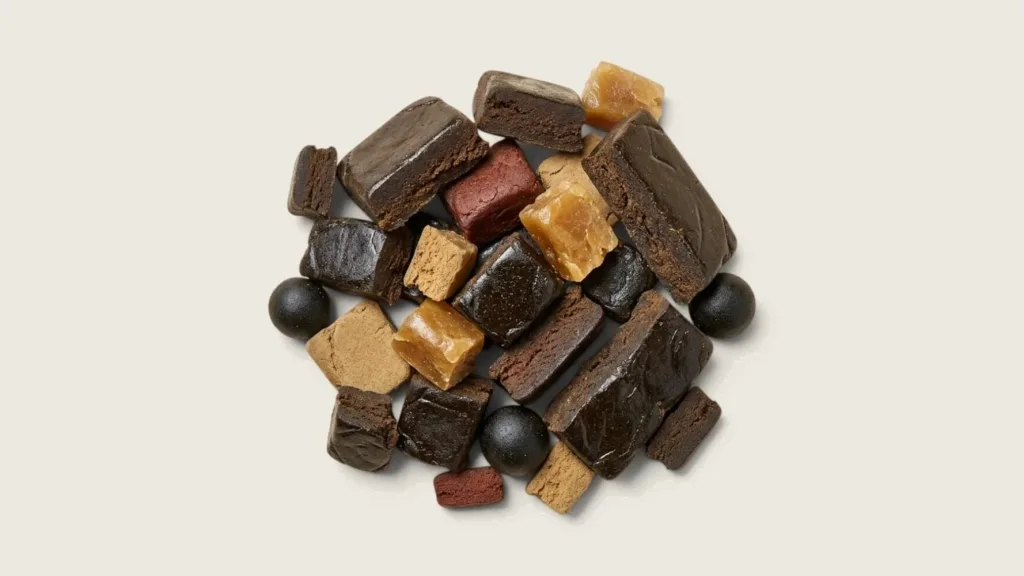
Colour is a signal. Fresh, well-made hash ranges from light blonde to deep brown depending on the strain and method. Dark, greenish hash usually means a lot of plant material got mixed in. That’s not a disaster, but it’s a sign the sift wasn’t fine enough or the wash wasn’t cold enough.
Smell is probably the biggest tell. Good hash should smell like a concentrated version of the strain it came from. If it smells like hay or wet grass, something went off in the drying or the wash. If it barely smells like anything, the trichomes may have been old or degraded before you started.
When you press it between your fingers, decent hash warms up and becomes pliable. It shouldn’t crumble to dust (too dry, possibly old) or stay rock-hard without any give (may have been pressed too aggressively with too much heat).
Once you’ve got your finished product, check out our guide on how to smoke hash once you’ve made it for the best ways to actually enjoy it.
Frequently asked questions
What’s the best flower to use for making hash?
Dense, well-cured bud with visible trichome coverage gives you the most to work with. Older flower or bud that’s been handled roughly will have lost a lot of its trichomes already, so you’ll get a weaker yield. Freshly cured flower from a strain known for heavy resin production is your best starting point.
Can I use trim or shake instead of whole flower?
Yes, and a lot of people do. Trim from a trichome-rich plant can make decent bubble hash. The yield and flavour won’t match what you’d get from whole flower, but it’s a good way to use material that would otherwise go to waste.
How long does homemade hash keep?
Stored properly in an airtight container away from light and heat, hash holds up well for several months. Over time the smell and flavour will fade as terpenes off-gas, but it doesn’t spoil the way food does. Keep it cool and dark.
Does the strain affect the hash?
Absolutely. The terpene profile of the strain carries through into the hash, especially with bubble hash and rosin where you’re preserving more of the aromatic compounds. A strain with a strong, distinct smell tends to produce hash with a strong, distinct smell. That’s part of what makes strain-forward hash interesting.
Is dry sift worth doing, or should I skip straight to bubble hash?
Dry sift is worth doing if you want to understand the basics and see what your flower is working with. It’s fast and low-commitment. If you find yourself wanting cleaner results with better flavour, that’s when bubble hash starts making sense. Most people who get into hash-making do dry sift first and upgrade later.
What’s the difference between kief and hash?
Kief is the loose, uncompressed trichome powder you collect during dry sifting. Hash is what you get when you press kief together with heat and pressure. Kief is a step on the way to hash, and some people use it as-is sprinkled on top of a bowl or joint.