What Makes Flower “Top Shelf”? How to Spot the Good Stuff
Key takeaways
- Top shelf flower is about more than THC numbers: smell, structure, freshness, and how it was grown all matter.
- The nose is one of the most reliable things you can check before you buy.
- Trichome coverage tells you a lot about how the plant was treated and harvested.
- Good trim and bud density are signs of a grower who cares, not just a machine that cut corners.
- Knowing what to look for means you stop guessing and start picking bud you’ll actually enjoy.
Top shelf flower is bud that was grown carefully, harvested at the right time, dried and cured properly, and still smells like something when you open the bag. That’s really what it comes down to. The label gets slapped on a lot of product that doesn’t earn it, so it’s worth knowing the actual signs.
Why “Top Shelf” Isn’t Just a THC Number
A lot of people shop by potency percentage and stop there. That’s understandable, it’s the biggest number on the package. But a high number doesn’t automatically mean good weed. You can have flower with a strong THC percentage that smells like nothing, burns harsh, and leaves you underwhelmed. You can also have a lower-percentage strain that’s beautifully grown, packed with smell, and way more enjoyable to smoke.
The percentage tells you about one compound. It doesn’t tell you how the plant was grown, how long it was dried, whether it was machine-trimmed into oblivion, or whether the smell that was there at harvest is still alive in the bag you’re holding right now. For a fuller picture of how to judge cannabis quality, those details matter just as much.
The Real Signs of Top Shelf Flower
The Smell
This is the first thing to check. Good bud smells like something, something distinct, something you’d notice. It might be skunky, gassy, fruity, piney, or earthy. The specific smell depends on the strain and which terpenes (the aromatic compounds in the plant) are dominant. What bad flower smells like is hay, damp paper, or nothing at all. Those are signs the drying or curing process went wrong, or the bud is just old.
If you can smell the jar or the bag through the packaging before you even open it, that’s a good sign. If you crack it open and have to stick your nose right in to catch anything, that’s not.
Trichome Coverage
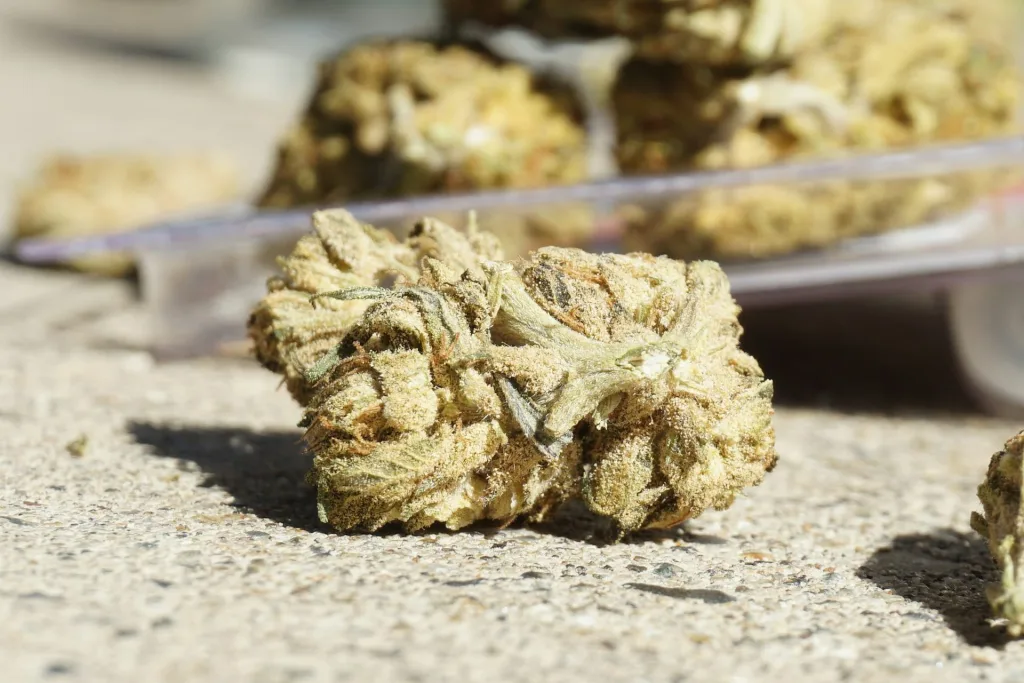
Trichomes are the tiny, hair-like crystals that coat the outside of good flower. You can see them with the naked eye as a frosty, almost glittery layer on the bud. They contain a lot of what makes flower smell and feel the way it does, so a well-covered bud is generally a well-grown one.
What you don’t want is bud that looks dry, dull, and flat. That usually means the trichomes have been damaged, from rough handling, bad storage, or just age. There’s a lot more to know about trichomes if you want to get into it, but even a quick visual check tells you something useful.
Structure and Trim
How a bud looks and feels says a lot. Top shelf flower tends to be dense without being compressed into a brick, and light without being airy or falling apart. The trim, meaning how the leaf material around the bud has been removed, should be clean and close without being so aggressive that the bud itself gets chewed up.
Machine trimming is fast and cheap, and it shows. It tends to leave buds looking rounded and uniform, and it can knock off trichomes in the process. Hand-trimmed flower from a smaller grower usually looks a little more natural and intact. That’s not always a dealbreaker, but it’s something worth paying attention to when you’re comparing options.
Freshness
Fresh bud has a slight give when you press it gently, not wet, not bone dry. It should spring back a bit. If it crumbles to dust the moment you touch it, it’s too dry. If it’s squishy and sticks together, it’s too wet. Both are problems.
Older or poorly stored bud loses smell first, then starts to degrade in texture. If the package date is months old and you’re not sure it’s been stored well, that’s worth considering. Check out the signs your bud has seen better days if you want to know exactly what to look for.
A Quick Comparison: What Separates the Tiers
| What You’re Checking | Top Shelf | Lower Tier |
|---|---|---|
| Smell | Strong, distinct, strain-specific | Faint, grassy, or nothing |
| Trichomes | Visible frost, intact coverage | Dull, sparse, or dusty-looking |
| Bud density | Dense but not rock-hard, good weight | Airy, light, or compressed |
| Trim | Clean, close, minimal leaf | Leafy or over-trimmed and rough |
| Texture / freshness | Slight give, breaks cleanly | Crumbles to dust or feels wet |
Small-Batch Growers and Why They’re Worth Looking At
A lot of the flower that genuinely earns a top shelf label comes from smaller grows. Not always, but often. Smaller operations can pay more attention to each plant, dialling in the dry, doing the cure properly, trimming by hand. A big commercial grow cranking out thousands of units a week is optimised for volume. A small-batch grower doing a few hundred pounds a run is more likely to be sweating the details.
That doesn’t mean every small grower is better, or every large producer is cutting corners. But when you see a craft or small-batch label, it’s worth asking what that actually means for that particular product. We pay attention to that at CannaBlossom, it’s part of how we decide what to bring in.
What to Actually Do With This When You Shop
When you’re picking flower, smell it if you can. Look at the trichomes and the trim. Check the package date. Ask us which growers we think are doing good work right now, that’s what we’re here for. A THC number is a starting point, not a verdict.
If you want to start with something we’ve already vetted, shop our Premium Flower (AAA) and see what’s currently in rotation.
Frequently asked questions
Does top shelf flower always have the highest THC?
No. THC percentage is one factor, but smell, freshness, trichome coverage, and how the bud was grown and cured matter just as much. Some of the best flower we carry isn’t the highest number on the shelf.
How do I know if a bud is fresh?
Fresh bud has a little give when you press it gently and bounces back slightly. It smells strong and distinct. Dry, crumbly bud with a faint smell has usually been sitting around too long or wasn’t stored properly.
What are trichomes and why do they matter?
Trichomes are the tiny crystal-like structures on the outside of the bud. They’re where a lot of the smell and the good stuff lives. A bud with dense, intact trichome coverage is generally a sign it was handled well from harvest through to the shelf.
Is hand-trimmed always better than machine-trimmed?
Usually, yes, hand trim tends to be cleaner and gentler on the bud, which protects the trichomes. Machine trim is faster and more consistent, but it can rough up the flower. It’s not an automatic dealbreaker, but it’s a useful thing to notice.
Can I tell quality just by looking at the bud through the packaging?
Partly. You can see colour, structure, and some trichome coverage through a clear window. Smell is harder to judge through sealed packaging, but if there’s any aroma coming through at all, that’s a decent sign. If you’re not sure, ask to hear more about the grower or the batch.
Why does the same strain smell different from different growers?
Growing conditions, genetics, harvest timing, and how the bud was dried and cured all affect the final smell. Two grows of the same strain can smell noticeably different. That’s one reason strain name alone isn’t the whole story, who grew it matters too.