Trichomes: The Frost That Signals Quality
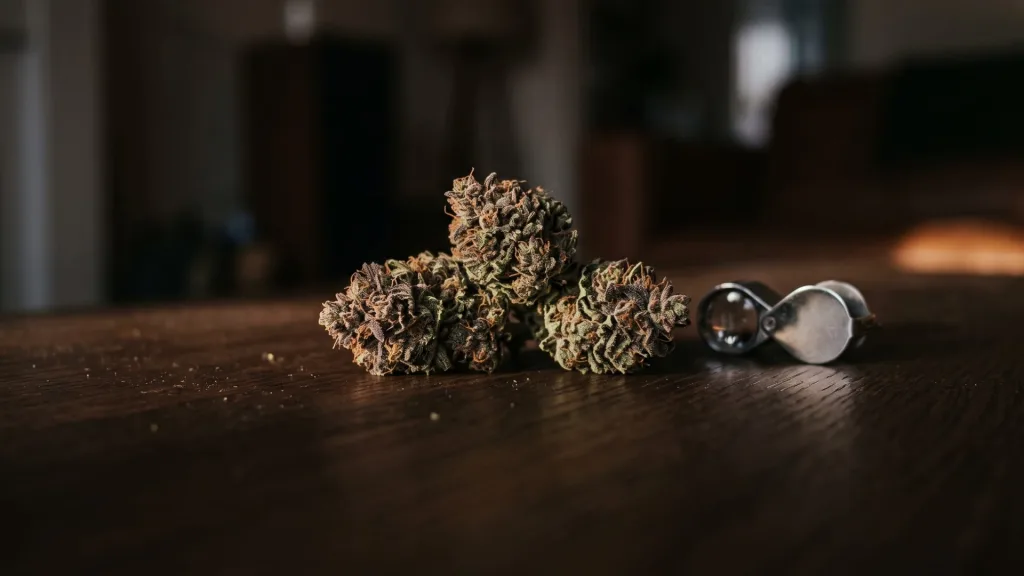
Key takeaways
- Trichomes are the tiny, hair-like crystals on cannabis flower that produce and hold terpenes, cannabinoids, and resin.
- There are a few different types, but the ones you can actually see are called capitate-stalked trichomes, the frosty coating on good bud.
- Trichome colour and coverage tell you a lot about how fresh and carefully handled a flower is.
- Heavy frost isn’t a guarantee of quality on its own, but it’s a useful signal when you combine it with other things you’re looking for.
- Trichomes are also the starting point for concentrates, hash, and anything made from resin.
Trichomes are the tiny, crystal-like structures that coat cannabis flower and produce essentially everything that makes one strain different from another, the smell, the flavour, and most of the potency. If you’ve ever held a really nice bud up to the light and seen it glitter, that’s the trichomes you’re looking at.
What are trichomes, exactly?
In plain terms, they’re microscopic outgrowths from the surface of the plant. You can find them on a lot of plants, nettles have them, mint has them, but on cannabis they do something special. They produce and store a sticky resin that’s loaded with cannabinoids (THC, CBD, and a bunch of others) and terpenes (the compounds responsible for how a strain smells and tastes).
If you want the full botanical picture, trichomes on Wikipedia covers the science in detail. But for shopping purposes, here’s what you need to know.
There are a few different types on the cannabis plant. Two of them are so small you can’t see them with the naked eye. The third type, called capitate-stalked trichomes, is the one you can actually see. These look like tiny mushrooms: a stalk with a round head on top. That round head is where the resin lives. When you see a frosty-looking bud, you’re seeing millions of these tiny structures packed together.
Why trichomes matter when you’re choosing flower
Trichomes are basically the factory floor for everything good in the bud. The terpenes that give a strain its particular smell, piney, citrusy, funky, floral, are made and held in trichome resin. So is THC. So a flower with dense, intact trichome coverage generally has more of both compared to a flower that’s been mishandled, over-dried, or sitting around too long.
That said, trichomes are fragile. Heat, light, rough handling, and time all degrade them. A batch that gets bounced around in shipping, stored warm, or dried too fast will lose trichomes, and with them, some of the smell and potency. This is one reason small-batch, carefully grown flower tends to smell noticeably better than mass-produced bud. The grower pays attention to the whole process, including how the plant is handled after harvest.
It’s also why a lot of us who care about quality pay attention to the nose on a bud before anything else. If the trichomes are intact and healthy, the smell should hit you right away when you open the bag. A flat or barely-there smell is often a sign the trichomes have been compromised somewhere along the way. For more on reading flower quality beyond just the frost, check out our guide on how to judge cannabis quality.
How to read trichomes when you’re shopping
You don’t need a microscope to get useful information from trichomes. Here’s what to look for with your own eyes, or with a simple loupe if you want to get nerdy about it.
Coverage and density
Good flower should look frosted, not just a little sparkle on the tips, but a consistent coating across the buds and often down onto the sugar leaves. Thin or patchy coverage can mean a lower-resin strain, or it can mean the flower wasn’t grown or handled particularly well. Density alone isn’t everything, but sparse coverage on something marketed as top-shelf is worth noticing.
Colour
This one’s easier to see with a loupe (a small magnifying glass), but you can sometimes spot it with the naked eye on very frosty bud. Clear trichomes mean the plant was harvested early. Cloudy or milky-looking ones indicate the resin has developed fully. Amber trichomes mean the resin has started to break down past its peak. Most quality flower is harvested when trichomes are mostly cloudy, maybe with a small percentage of amber.
A bud that’s gone mostly amber overall has been sitting around too long. Fresh, well-stored craft flower should have that milky, almost opaque look to the frost.
Intact vs. broken
Rough handling knocks trichomes right off the bud. If you’re looking at flower that seems dull or powdery at the bottom of the bag, some of that frost has been lost. This is one reason bag appeal matters, the visual condition of the bud is telling you something real about how it was treated.
| What you see | What it likely means |
|---|---|
| Dense, milky-white frost all over | Well-developed resin, harvested at a good time, handled carefully |
| Thin or patchy coverage | Lower-resin strain or a less attentive grow |
| Mostly amber trichomes | Past peak freshness, resin has degraded |
| Powdery residue in the bag | Trichomes have been knocked off, likely rough handling |
Trichomes and concentrates
Trichome resin is also the starting point for pretty much every cannabis concentrate out there. Hash is one of the oldest examples: you’re essentially collecting and pressing those trichome heads into a solid. Modern solventless concentrates like bubble hash and rosin work the same way, using cold water, ice, or pressure to separate and collect the resin without any chemical solvents involved.
This is why hash made from high-trichome flower smells and tastes so good. The quality of the starting material matters enormously. If you’re into concentrates, browsing our selection of hash is a good place to see what craft resin looks and smells like.
If you’re mainly a flower person and want to put what you’ve learned to use, Shop our Premium Flower (AAA) and compare a few strains side by side, the difference in frost between a well-grown small-batch strain and something more generic is pretty obvious once you know what to look for.
Frequently asked questions
Can you see trichomes without a magnifier?
On frosty bud, yes, you can see the general coating pretty clearly with the naked eye. But to actually see the shape of individual trichomes and check their colour, you’ll want a small loupe (60x or so) or a jeweller’s loupe. They’re cheap and genuinely useful if you’re picky about your flower.
Does more frost always mean stronger weed?
More trichomes generally means more resin, and more resin means more cannabinoids and terpenes. So there’s a real connection, yes. But it’s not a perfect rule, strain genetics, growing conditions, and how the flower was cured all play a role too. Frost is a good signal, not the only one.
Why does good bud sometimes lose its smell fast?
A lot of it comes down to trichomes. Once you grind flower or expose it to air repeatedly, the trichomes break down and the terpenes inside them evaporate. Keeping your bud in an airtight container, away from heat and light, slows that process down significantly.
Are trichomes the same as kief?
Kief is essentially loose trichome heads that have been sifted off the flower, what collects in the bottom chamber of a grinder. So kief is made up of trichomes, but the terms aren’t exactly interchangeable. Trichome is the plant structure; kief is the collected, separated resin from those structures.
Do all cannabis strains have the same trichomes?
They all have the same types of trichomes, but genetics really do affect how many a plant produces and how resinous they are. Some strains are just naturally more frosted than others. A dense, sticky indica-leaning strain might look completely different from a drier, fluffier strain even if both were grown in identical conditions.
What does it mean if my bud looks dull or dry?
It usually means the trichomes have degraded, either from being over-dried, stored badly, or just being older flower. The smell will often confirm it: dull-looking bud that also smells faint has lost a lot of its resin. It’s still smokeable, but you’re not getting the full experience of what that strain can be.