Landrace Strains: The Original Cannabis Genetics
Key takeaways
- Landrace strains are local cannabis varieties that developed in one region over many generations.
- Most weed you’ll find today descends from landraces, but very few true landraces are still grown in their original form.
- They’re known for a regional character and smell tied to where they came from, think Afghani, Durban Poison, Thai, or Hindu Kush.
- If you pick weed by strain, knowing your landraces helps you understand why certain bud smells and feels the way it does.
Landrace strains are cannabis plants that developed in a specific part of the world over generations, shaped by local conditions and by farmers saving seed, not by modern breeding programs. They’re the originals. Everything else, pretty much every strain on the shelf today, traces back to them.
What actually makes a strain a “landrace”?
The word “landrace” gets used in plant science broadly, not just for cannabis. The broader botanical definition of landrace refers to a locally adapted, traditionally grown plant variety that hasn’t been formally bred or hybridised. For cannabis, that means plants that grew in one region for so long that they adapted to the local climate, soil, altitude, and day-length cycles there. Local farmers kept them going for generations, saving seed from the plants that did well.
Afghani plants got stocky and dense because short mountain summers rewarded fast-finishing plants. Durban Poison from South Africa got tall and energetic with a particular sweet, anise-like smell because that’s what thrived near the coast in KwaZulu-Natal. Thai plants grew stretchy and slow in a humid tropical climate.
This is also why understanding cannabis strains gets so much easier once you understand landraces. Most strains you already recognise trace their genetics back to landraces.
The big landrace families and what they’re known for
You don’t need to memorise a list, but a few regional families come up constantly because they’re the genetic building blocks breeders have returned to for decades.
Afghani and Hindu Kush
These come from the Hindu Kush mountain range running through Afghanistan and Pakistan. They’re indica-leaning, tend to be shorter plants with broad leaves, and produce dense, resinous buds. The smell is typically earthy, hash-like, sometimes a bit funky. These genetics are behind a massive chunk of the heavy, relaxing strains on shelves today. Many heavy, earthy strains are often described as having Afghani roots. If you’ve ever seen or smoked traditional hash from that part of the world, the sticky, dark resin is a direct product of these genetics.
Durban Poison
From South Africa’s port city of Durban. It’s one of the few landraces that made it into the modern market almost intact. Lighter, sometimes fluffy buds, a sweet and spicy smell with a distinct anise or liquorice note, and a clear-headed, upbeat feel. Breeders have used it to add energy and a particular terpene sharpness to hybrids. Girl Scout Cookies has Durban Poison in its lineage, which explains a lot about that strain’s particular nose.
Thai and other tropical lines
Thai, Cambodian, Vietnamese, Acapulco Gold from Mexico. These are sativa-leaning, tall, slow-growing plants from tropical climates. They often have a fruity, sometimes almost fuel-like or spicy smell. They take a long time to finish flowering, which is why breeders tend to use them sparingly when crossing, but they add a sharper, heady feel and a spicier smell to hybrids. Haze, one of the most influential strains ever bred, is a cross of several of these tropical landraces.
Ruderalis
Less talked about but worth knowing. Cannabis ruderalis comes from Russia and Central/Eastern Europe, adapted to short summers by developing the ability to flower based on age rather than light cycles. On its own, it’s not particularly potent or interesting to smoke. But breeders have used ruderalis genetics to create autoflowering strains, which is a huge chunk of the modern seed market. So even if you’ve never heard of ruderalis, you’ve probably smoked its descendants.
Are true landraces actually available anymore?
Pure, unmodified landrace genetics are rare. Decades of crossbreeding, seed trading, and commercial growing have introduced other genetics into most populations. What you’ll find on shelves are usually either straight-up modern hybrids, or strains that are marketed as landrace-derived but are actually stabilised versions that breeders worked to keep as close to the original as possible.
That’s not a bad thing. A well-grown Afghani or Durban Poison from a careful small-batch grower can still be incredibly true to the original profile, even if it’s technically a few generations removed. The genetics are preserved, even if the plant isn’t growing in the Hindu Kush.
What you’re really looking for, if you want that landrace experience, is a grower who chose that strain on purpose and grew it with care. Have a look at our premium flower if you want to see small-batch options.
Why landrace genetics still matter for strain shopping
When you’re looking at a strain and wondering why it smells the way it does, or why it hits differently than something else with a similar THC number, genetics are usually the answer. A strain heavy in Afghani lineage is going to lean toward that earthy, hashy nose and a denser structure. Something with strong Thai or Haze ancestry is probably going to be more floral or spicy, and the feel will be more heady.
Terpenes, the aromatic compounds that give each strain its smell, follow genetic lines pretty closely. Myrcene is common in Afghani-heavy genetics and tends to give that earthy, almost musky base note. Terpinolene shows up a lot in the Southeast Asian-influenced lines and contributes that floral, slightly piney sharpness. Knowing the lineage gives you a shortcut to knowing the smell and the vibe before you even open the bag.
| Landrace region | Typical nose | Well-known descendants |
|---|---|---|
| Hindu Kush / Afghani | Earthy, hash, funk | Northern Lights, Bubba Kush |
| Durban Poison (South Africa) | Sweet, anise, spice | Girl Scout Cookies |
| Thai / Southeast Asian | Fruity, floral, fuel | Haze, Jack Herer, Super Silver Haze |
| Ruderalis (Eastern Europe) | Mild, grassy | Most autoflowering strains |
What to look for when shopping landrace-influenced flower
Look at the genetic background, not just the strain name. A good product description tells you whether a particular Afghani came from a grower who specifically sourced those seeds or whether it’s a name slapped on something generic. Strain name alone doesn’t tell you much.
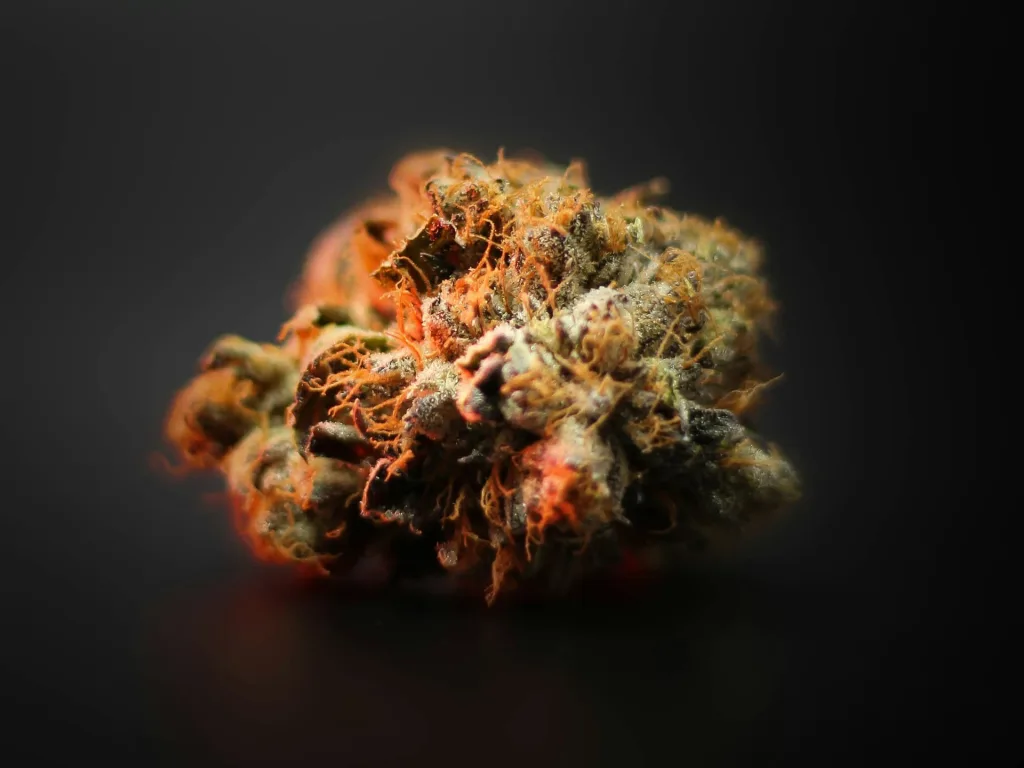
Look at the structure and the smell. Afghani-family bud tends to be dense, with a strong, sometimes funky or earthy smell right out of the bag. Durban Poison or Haze-family flower is usually lighter in structure, sometimes a bit fluffy, with that sharper, sweeter nose. If the smell is weak or the bud looks uniform and machine-trimmed to the point where you can’t tell what shape it started as, it probably wasn’t grown with genetics in mind.
Small-batch growers who specifically choose landrace or landrace-derived strains are your best bet. They tend to be the ones who actually care about what the plant is supposed to taste and smell like, not just how much it yields.
Frequently asked questions
Are landrace strains stronger than modern hybrids?
Not necessarily. Potency, measured by how much THC a plant produces, has generally increased through decades of selective breeding. Many modern hybrids are stronger in that sense. Landraces are interesting for their regional character and smell, not for being the most potent option on the shelf.
Is Haze a landrace strain?
No, Haze is a hybrid. It’s usually said to have been bred in California in the 1970s by crossing several tropical landrace lines, including Thai, Colombian, and South Indian genetics. It’s landrace-derived and carries a lot of those original terpene characteristics, but it’s a deliberate cross, not a landrace.
What’s the difference between a landrace and an heirloom strain?
A landrace is the original local variety, still tied to the region where it developed. An heirloom usually means a landrace that was taken out of its home region and kept going somewhere else by preserving its seed line. Heirlooms are preserved, landraces are original. The lines can blur, but that’s the basic distinction.
Why do so many popular strains have Kush in the name?
Because Hindu Kush and Afghani landraces are in the lineage of so many modern strains. Breeders kept going back to those genetics because they produce dense, resinous buds and have a reliably strong, earthy smell that people liked. The “Kush” name became shorthand for that Afghani-influenced profile, and it stuck.
Can I find true landrace seeds or flower in Canada?
You can find strains marketed as landraces, and some of them are quite faithful to the original genetics. True, unmodified landrace populations are mostly found in their regions of origin. What’s available commercially is usually a stabilised version, which can still be excellent and genuinely representative of the original, depending on how carefully it was grown and sourced.
Does the growing environment change a landrace’s smell or effects?
Yes, growing conditions affect any cannabis plant, landraces included. Temperature, light, humidity, soil, and how the plant is harvested and cured all influence the final terpene profile and bud quality. Genetics set the potential, but the grow determines how much of that potential you actually get in the bag.